Highlights from Washington, D.C.

A word to the wise: there is far more to see and experience in Washington, D.C., than anyone can accomplish in a single visit. I imagine even locals haven’t made it through everything. Monuments, museums, events, and history come at you from every direction. It’s a sensory overload in the best possible way.

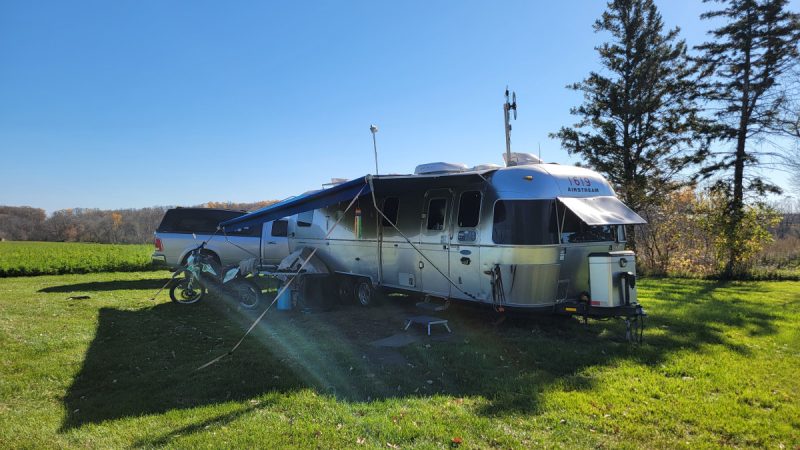
We stayed four nights at the Greenbelt Campground in Maryland, not far from two Metro stations—College Park and the Green Line’s last stop in Greenbelt. The campground is part of the National Park system. There are no hookups, but the location is incredibly convenient.

Our first excursion into D.C. was on a Thursday. We rode our bikes down a rustic trail from the campground to the street, then continued on the sidewalks to the College Park Metro station. With a little elevator maneuvering, we were able to take our bikes onto the Green Line and ride straight into the city.

Our first stop: the National Archives. Seeing the original documents that shaped this country is deeply moving—the Declaration of Independence, the U.S. Constitution, and the Bill of Rights, along with rotating exhibits such as the Emancipation Proclamation and documents related to women’s suffrage (the 19th Amendment).

After a quick lunch from a food truck, we biked to the Spy Museum. This museum is phenomenal and really deserves almost a full day, not just a couple of hours. We bought general admission tickets (special exhibits require an additional ticket). The main museum begins on the fifth floor and continues on the fourth; special exhibits are on the third. We didn’t have enough time to get through the top two floors. In fact, we cut our time short on the fifth floor just to see part of the fourth before closing at 5 p.m. Next time, we’ll dedicate an entire day to the Spy Museum.

On Saturday, we parked for free at the Greenbelt Metro station—a huge lot—and took the Green Line into D.C. without our bikes because we planned to do a Big Bus Hop-On-Hop-Off tour. While the bus tour is a good way to get a general overview of the city, it’s also time-consuming and often frustrating due to dense traffic and constant stoplights.

I believe we got off the Metro at Gallery Place and walked to Ford’s Theatre. Unfortunately, a private tour prevented us from entering, but we were able to walk through the Petersen House (a boarding house back in the day) across the street, where Abraham Lincoln was taken after he was shot.

From there, we walked to the Big Bus stop to catch our first ride. Across the street stood St. Patrick’s Catholic Church, the oldest parish in Washington, D.C.

We hopped off at the World War I Memorial, which sits across from the historic Willard Hotel. In the distance, we noticed massive cranes—part of the extensive construction happening near the White House.

Our next stop was the Capitol Building. From there, we walked to the Thomas Jefferson Building, also known as the Library of Congress—my absolute favorite building in D.C. The architecture and the atmosphere are inspiring because…BOOKS!

After waiting quite a while for the next Big Bus, we rode to The Wharf and found a spot for a late lunch. We decided to simply enjoy the ride afterward—some scenery, lots of traffic—and made our final hop-off on Constitution Avenue, essentially the White House stop. The White House itself is on Pennsylvania Avenue, but we couldn’t get any closer. President’s Park was completely barricaded and under heavy construction, and combined with the cranes near the White House, pedestrian access was entirely blocked.

A Few Tips for Visiting Washington, D.C.:

    1. Plan ahead and give yourself time. Many places in D.C. require hours, not minutes. You may also encounter lines or security checkpoints that slow things down. Build in buffer time so you can actually enjoy what you came to see.
    2. Create your own “zones.” Focus on one area per day—or even per trip. There is more than enough to fill your time within just a few blocks.
    3. Skip the Big Bus tour. You’ll spend more time sitting in traffic or waiting for the next bus. Rent e‑bikes or scooters, plan to walk, and use the Metro.
    4. Know the rules at the Capitol Visitor Center. You cannot bring drinks, food, or snacks inside, and there are no lockers. Consider yourself warned.
    5. Familiarize yourself with the Metro. It’s easy to use and relatively inexpensive (our Thursday roundtrip was about $10 per person; Saturday was half price). You can tap your credit card at the turnstile—no need for a Metro card. Lines are color‑coded, stops are clearly marked, and Metro employees are helpful.
Verified by MonsterInsights