


We originally planned to spend a few weeks exploring Eastern Canada, but for various reasons, our trip was shortened to just five days (four nights) in New Brunswick. Even so, we made every day count.
Campobello Island was the spark that started this whole adventure. I’m not sure how Carl discovered it, but once it landed on our radar, it became the start of our New Brunswick excursion. On a rainy morning, we drove up the coast of Maine through small towns like Cherryfield—the Blueberry Capital of the World—and Machias (pronounced Ma‑CHAI‑us, like chai tea). Machias surprised us with its metropolitan feel for a small town of less than 2,500 people.
 We continued on to Lubec, Maine, where we crossed the Franklin Delano Roosevelt Bridge into Canada — more specifically, onto Campobello Island, New Brunswick.
Why, you may ask, is the bridge named after a U.S. president? Was FDR from Maine?
No! Franklin Delano Roosevelt was born and raised in New York, but his family vacationed on Campobello Island in the late 1800s and early 1900s. In 1915, Franklin and Eleanor purchased a summer home there, planning to spend two to three months each year on the island with their children. In fact, the family was vacationing on Campobello the year FDR contracted polio.
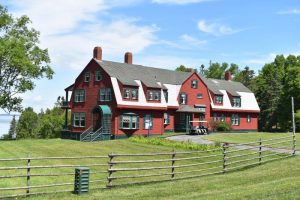 Today, the Roosevelt Cottage is the centerpiece of the Roosevelt Campobello International Park — a joint effort between Canada and the United States. The Mulholland Point Lighthouse, visible from the bridge as you cross into Canada, is part of the park, along with a Visitor Center, several neighboring cottages, hiking and biking trails, and plenty of outdoor space. We enjoyed a guided tour of the Roosevelt Cottage and learned that Eleanor’s Tea is held twice daily at the Wells‑Shober Cottage. The Hubbard Cottage and Prince Cottage also belong to the park, each with its own historical charm.
Our time on Campobello Island was short—just one night—so we didn’t experience everything the park offers. But we did make our way to the Head Harbour (East Quoddy) Lighthouse on the northern tip of the island. It’s reachable by foot only during low tide (and preferably when it hasn’t rained). Although we arrived during low tide, it had been raining, making for slick conditions. So we chose not to traverse the steep stairs and slippery shoreline. However, the overcast day and foggy atmosphere made for a very photogenic lighthouse!


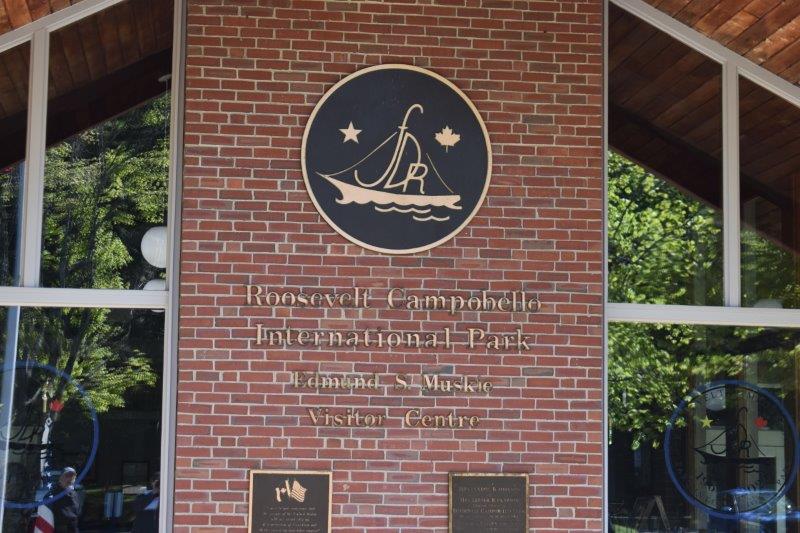


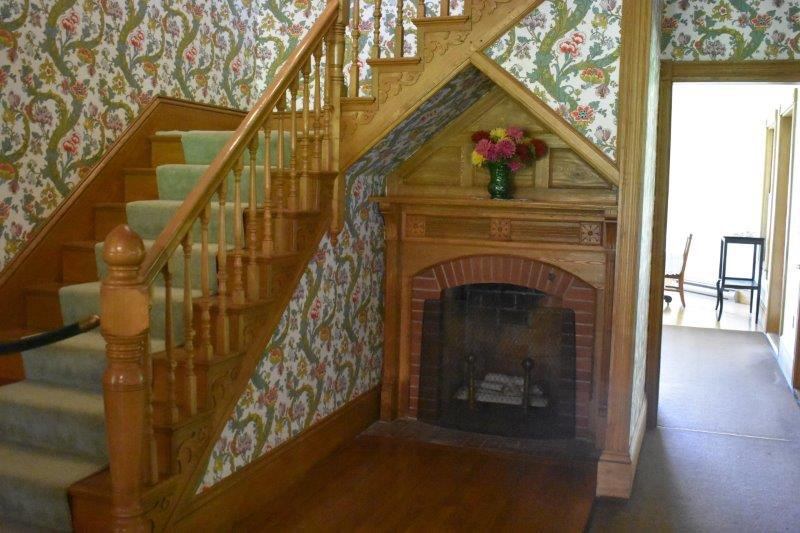


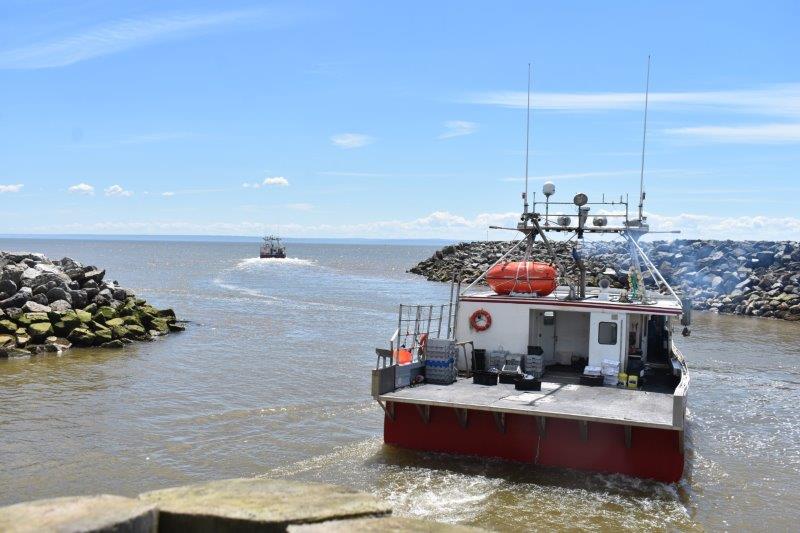
After touring the Roosevelt Cottage and enjoying lunch at the Prince Cottage Café, we headed toward the Deer Island ferry stop. The road down to the ferry is steep, gravel, and leads straight to the water with no place to turn around. Since we were pulling our Airstream, we arrived about 40 minutes early and were first in line. The ferry charges by vehicle length, and our truck plus Airstream measured around 55 feet, costing about $80 CAD.


On Deer Island, we drove from one end to the other to catch the larger ferry to the New Brunswick mainland. We did spot a deer on Deer Island (though I have no photographic proof), and the drive was winding, hilly, and narrow. The larger ferry was packed with semi trucks, service vans, and passenger cars. The line was long, and we weren’t sure we’d make it on — but we did.
Island‑hopping our way to the mainland was a definite highlight of our trip.
Our longer stay (three nights) was at New River Beach Provincial Park on the Bay of Fundy, about 30 minutes south of Saint John. The mosquitoes were thick. I apparently have a sweet spot behind my left ear that they enjoyed feasting on.
We spent a full day at Fundy National Park, about an hour north of our campground. Dramatic coastlines, dense forests, hungry mosquitoes, interesting hikes, friendly staff, a covered bridge, campgrounds, and dirt roads leading to quiet lakes—all the makings of a perfect national park experience. If we return to Eastern Canada, we plan to stay inside the park so we can explore more fully. There are a couple of hikes we’d like to tackle, a lake we’d like to kayak, and plenty more waiting for us.




And, of course, the shoreline changes dramatically between low tide and high tide — a classic feature of the Bay of Fundy. We watched the water rush in at Herring Cove Beach, and later saw an even more dramatic transformation at the beach across from our campground.
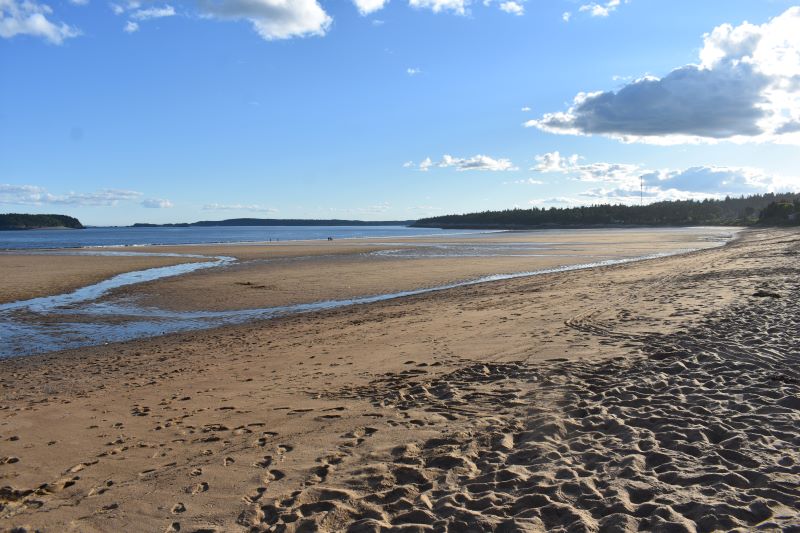


If you plan to visit Eastern Canada, be sure to put Fundy National Park and Campobello Island on your list. They’re places that stay with you long after you’ve crossed back over the border.
For a few other gems on the East Coast, check out our blog posts on Cape May, NJ—Now an East Coast Favorite! and One Day in Cape Cod – Too Short!


Leave a reply